Review Library

Curated film reviews with instant context and standout voices

Discover the hottest critiques, scan the latest releases, and jump into what reviewers are saying right now.

Review Pulse

147 Reviews
30 Titles
1970/1/1 Latest update
Review Focus

Hottest Reviews

Top-rated titles with the strongest review activity.

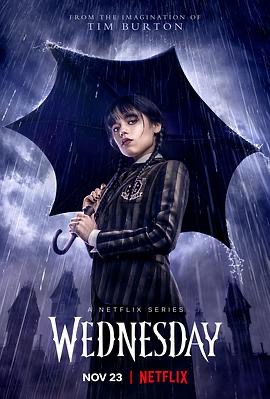
Wednesday Season 1 7.8

Wednesday Season 1

Comedy Mystery Crime
7.8 Score 143731 ratings Jun 24, 2025
Comedy, Mystery, Crime, Fantasy Jenna Ortega, Gwendoline Christie, Christina Ricci
AyatiBolati Code Words of Werewolf Legends (Also Known As: I Didn't Expect to Start Shipping Wenclair with Mythology)

This reflection on *Wednesday* and werewolf mythology delves into the fascinating blend of folklore, psychology, and cultural interpretations. Here's a summarized translation of the key points: In *Wintering* by Katherine May, she mentions that the full moon in January is called the "Wolf Moon" because wolves, having endured a harsh winter, emerge from the forest in search of food. This is the perfect time to talk about werewolves, and in *Wednesday*, Enid, Wednesday's "best friend," is a young werewolf. Werewolves, as a mythical creature, have dual traits connected to both wolves and humans. Historically, humans have harbored fear and hostility toward wolves. In the medieval Anglo-Saxon period, people were required to pay a tribute of wolf pelts or even offer a wolf’s tongue as punishment for crimes. Wolves were often associated with supernatural evil forces, such as witches, and were portrayed as villains in fairy tales. In Anglo-Saxon law, criminals were labeled as “wolf-heads,” meaning they could be hunted without consequence. The transformation of a person into a wolf was seen as a form of punishment, stripping away their human identity. The emotional core of the werewolf myth aligns with these themes of repression and fear of non-human traits. Transforming into a wolf symbolizes the exposure of one's "inhuman" qualities, traits that human society often suppresses, fears, and rejects. The first werewolf myths often featured villagers who secretly transformed into wolves at night to steal livestock. Wolves were seen as a manifestation of unrestrained, subconscious desires. In *A Song of Ice and Fire*, characters like Arya and Bran experience dreams of transforming into wolves, highlighting the connection between dreams, subconscious desires, and the "wolf" within. The werewolf metaphor represents the duality in humans—the civilized, rational side and the untamed, animal side driven by biological instincts. Some scholars argue that werewolves represent the suppressed human nature or societal side, where the beastly instinct, like sexual desire, takes over. In some Northern European legends, werewolves have strong sexual implications, as seen in stories where werewolves lick their victims or engage in strange acts. The transformation of a werewolf is tied to the full moon, which in many cultures is associated with femininity and fertility. Moon goddesses like China's Chang’e or the Greek goddess Mene symbolize the moon's connection to the female cycle. The moon’s phases also align with the menstrual cycle, reinforcing this link. Some folklorists suggest that the werewolf's transformation under the full moon symbolizes the release of repressed sexual and reproductive energy. In *Wednesday*, Enid's words about the potential loneliness of a wolf unable to transform into a werewolf, emphasizing the desire for connection and the importance of finding a mate, reflect this aspect of werewolf lore. The werewolf's transformation isn’t just about physical change; it also symbolizes sexual maturity and the unleashing of desires that were previously repressed. This analysis enriches *Wednesday* by showing how Enid’s werewolf identity isn’t just about a fantasy creature; it’s tied to deep-rooted cultural and psychological themes around sexuality, repression, and identity.

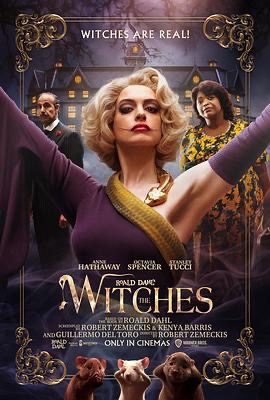
The Witches 6.0

The Witches

Comedy Fantasy Adventure
6.0 Score 30515 ratings Jun 23, 2025
Comedy, Fantasy, Adventure Anne Hathaway, Octavia Spencer, Stanley Tucci
Corydalis yanhusuo Children's Comedy Fantasy Film

In December 1968, in Chicago, 8-year-old African American boy Gatsby loses his parents in a car accident and moves to live with his grandmother in Demopolis, Alabama. His grandmother buys him a pet white mouse, which he names Daisy. One day, at a grocery store, they meet a Black witch who offers Gatsby candy. His grandmother tells him the story of her childhood friend, Alice Brew, who became a chicken after accepting candy from the witch. The witches are notorious for hating naughty children; they are bald, with mouths extending to their ears, and their fingers and toes have three digits. Gatsby’s grandmother is a Vodou priestess. For safety, Gatsby’s grandmother takes him to New Orleans and has his cousin, Easton, book a room at the Royal Island Hotel, where Easton works as the executive chef. Unfortunately, the witches, disguised as the Child Abuse Prevention Society, are holding a meeting at this hotel. Gatsby sneaks into the attic to spy on the gathering, where the elder witches plan to eradicate all children. A fat boy, Bruno, accidentally stumbles into the meeting and is transformed into a mouse by the witches' magic. Daisy bravely saves Bruno, but Gatsby is caught by the witches and also turned into a mouse. Daisy's real name is Mary. The three mice mix the witches’ purple potion into the soup, causing all the witches to turn into mice as well. They then steal all of the witches' potions and money.

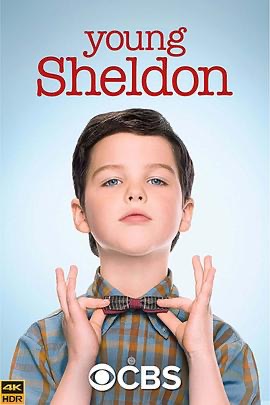
Young Sheldon Season 1 9.3

Young Sheldon Season 1

Comedy
9.3 Score 163859 ratings Jun 24, 2025
Comedy Iain Armitage, Zoe Perry, Lance Barber
momo The Heartwarming Version of Sheldon

I have to say, compared to *The Big Bang Theory*, I prefer this spin-off. Watching *TBBT*, I always felt like Sheldon was a genius raised in an ordinary family and well taken care of—he’s a bit sarcastic, a little stubborn, has almost zero social skills, and reacts slowly or not at all to various emotions. But he's a cute, quirky, and normal person—he’s not antisocial, depressed, or crazy. *Young Sheldon*, as a family drama, really does a great job of showing Sheldon’s growth in a typical family. Although the family is loud and chaotic, you can still feel the love between them, and each family member feels real and fleshed out. The young actor perfectly portrayed the Sheldon I imagined as a child. I can truly believe that this is a genius, smart but awkward, with the innocence and cuteness of a child. Compared to the adult Sheldon in the early seasons of *TBBT*, young Sheldon has more humanity and childlike qualities. He would, for example, take off his gloves and hold his father’s hand when he hears that his dad is sad about being fired; he’d check out friendship books because he knows his mom is worried about him not making friends; he’d lose sleep when his dad is sick and in the hospital. This version of Sheldon is absolutely adorable—he's not emotionally distant and only focused on knowledge. He’s not a precocious child; despite his extraordinary intelligence, his emotional expressions are those of a child. His awkward ways of showing love are the most fun to watch. Maybe I just can't resist this kind of heartwarming family drama. The first eight episodes had so many moments of family bonding that really touched me. In episode 4, when Meemaw says in the car, "When you get older, you start losing hair, wetting the bed, blah blah, you become a baby again..." and in episode 8, when Sheldon says, “That was the best trip I ever had. I wish I’d told my father while he was alive,” I instantly teared up. Time, please slow down... little Sheldon, please take your time growing up...

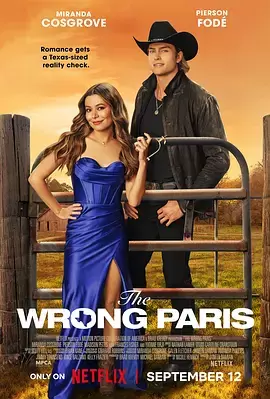
The Wrong Paris 5.8

The Wrong Paris

Drama Comedy Romance
5.8 Score 1424 ratings Mar 6, 2026
Drama, Comedy, Romance Miranda Kasgrave, Pearson Ford, Madison Pettis, Yvonne Augie
sour plum drink Surprisingly good! The scenery is beautiful

Surprisingly good! The scenery is beautiful, with autumn forests and pastures, and a light mist swirling around the river – perfect for this time of year. The dating reality show is quite interesting; it's more like a challenge game than a dating show, with lots of laughs. Cinderella was really effective, haha. Speaking of which, didn't the production team anticipate this ending? It felt like an obvious loophole, basically just giving the couple start-up capital. The guy is handsome and the girl is beautiful, but the romance is just so-so. However, the ending was still a little touching. It's a rom-com of above-average quality (comparing the rom-com shows from around 2000 to those from 2020 onwards, the early shows mostly made the female lead choose between career and love; now it's about having both – times have changed).

Full Library

All Reviews

Browse the complete review feed in release order.

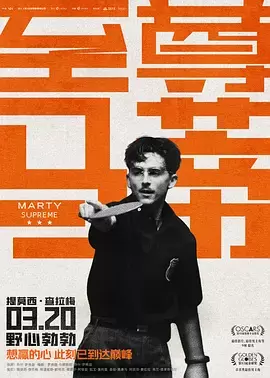
Marty Supreme 7.3

Marty Supreme

Drama Sports
7.3 Score 10781 ratings Mar 5, 2026
Drama, Sports Timothée Chalamet, Gwyneth Paltrow, Odessa Azian, Kevin OLeary
Spider Killer Rough Diamond 2.0! Authentic Safdie flavor

It's practically an upgraded version of *Uncut Gems*, but in *Uncut Gems*, I couldn't understand why the character just wanted to stop the farce as soon as possible, while in this film, I genuinely enjoyed watching him try to turn things around. The main difference is that Howard, the protagonist of *Uncut Gems*, has a pure gambling mentality, deliberately putting himself in trouble just to pursue the ultimate profit, even though he already has assets, a family, and a mistress. His "meaningless" self-destruction made me unable to like the film, even though I admit *Uncut Gems* was very well-made. Marty, on the other hand, is all about playing ping-pong. He has limited resources, connections, and background, so he can only seize every possible opportunity and try everything. (Of course, he's also a complete jerk.) Although he constantly makes mistakes, gains opportunities and then loses them, you know he absolutely has to play this match, and you can follow his frenzied emotions while watching. Reflecting on it, this film perfectly interprets the idea that "a person only lives for a few moments," and Marty lives for those few moments of winning matches (to avoid spoilers). His life outside of matches is almost like the recently popular "cutting line"—life is full of lemons, requiring constant running around and trying every means possible. The aforementioned inherent limitations forced him to constantly "bump into walls," a situation aptly described by the Chinese translation of his name, "Rushing Headlong." T. Chalamet's performance exceeded expectations. Before watching the film, I thought A24's Oscar hopes were just typical boasting, but after a year (or even several) of decline, they finally turned things around this year. His performance in several scenes was incredibly accurate; it's hard to imagine he's the frivolous and superficial person he is in real life. Actors ultimately rely on their work. The film (150 minutes) is relentlessly fast-paced, with many scenes reminiscent of the chaotic and hectic pace of "Good Times with Diamonds," but it also offers moments of respite, making it one of Safdie's best-paced films. Most of the plot deviates from expectations, allowing you to confidently anticipate how the characters will mess things up again. It must be said that Safdie's protagonists are legendary figures of resilience; ordinary people crumble under pressure, but these extraordinary individuals overcome one challenge after another, living each day as if it were 48 hours in a day. Furthermore, the table tennis segment was surprisingly well-shot (and even had a bit of a patriotic theme), especially the most important match. The almost suffocating external factors made the rhythm and emotions of the match particularly exciting. Shouldn't Chen Sicheng think of a way to copy a Chinese table tennis video? (Who are Deng Chao and Yu Baimei?)

The Witches 6.0

The Witches

Comedy Fantasy Adventure
6.0 Score 30515 ratings Jun 23, 2025
Comedy, Fantasy, Adventure Anne Hathaway, Octavia Spencer, Stanley Tucci
Corydalis yanhusuo Children's Comedy Fantasy Film

In December 1968, in Chicago, 8-year-old African American boy Gatsby loses his parents in a car accident and moves to live with his grandmother in Demopolis, Alabama. His grandmother buys him a pet white mouse, which he names Daisy. One day, at a grocery store, they meet a Black witch who offers Gatsby candy. His grandmother tells him the story of her childhood friend, Alice Brew, who became a chicken after accepting candy from the witch. The witches are notorious for hating naughty children; they are bald, with mouths extending to their ears, and their fingers and toes have three digits. Gatsby’s grandmother is a Vodou priestess. For safety, Gatsby’s grandmother takes him to New Orleans and has his cousin, Easton, book a room at the Royal Island Hotel, where Easton works as the executive chef. Unfortunately, the witches, disguised as the Child Abuse Prevention Society, are holding a meeting at this hotel. Gatsby sneaks into the attic to spy on the gathering, where the elder witches plan to eradicate all children. A fat boy, Bruno, accidentally stumbles into the meeting and is transformed into a mouse by the witches' magic. Daisy bravely saves Bruno, but Gatsby is caught by the witches and also turned into a mouse. Daisy's real name is Mary. The three mice mix the witches’ purple potion into the soup, causing all the witches to turn into mice as well. They then steal all of the witches' potions and money.

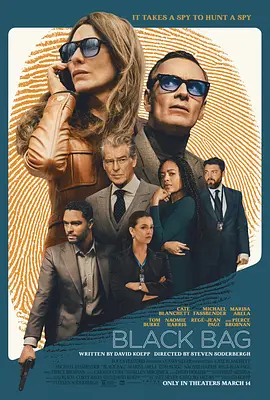
Black Bag 6.0

Black Bag

Drama Romance Suspense
6.0 Score 6359 ratings May 29, 2025
Drama, Romance, Suspense, Thriller Michael Fassbender, Cate Blanchett, Marissa Abela, Tom Burke
Ask It turned out to be a British humor shot by Americans

It feels like authentic British humor, and it was made by an American director and screenwriter. It's quite surprising to think that the editor of Jurassic Park and the director of Ocean's Eleven were both very similar. Let me tell you some interesting details, including spoilers: - At the beginning, when the male protagonist went to find the informant, the informant was hugged by many women and said that he just cheated accidentally. The male protagonist persuaded him to go home, and the informant actually went back. In the next scene where the informant was about to die, the informant was at home discussing going out with his wife on the weekend to ease the relationship - When the male lead pretended to lose his work badge and went to find the female lead, the female lead's boss was shown in the meeting room for the first time. The old Bond showed his sovereignty by switching the glass. - When the male protagonist said goodbye to the female protagonist on the night of the trip abroad, he first spoke French and then German, because both languages are used in Switzerland. The female protagonist frowned slightly after hearing this, which also showed that she seemed to realize that the male protagonist was checking her out. - In the meeting after the vulnerability incident, Uncle Fa delicately showed the panic beneath his calm surface. If you look closely, his hands were shaking when pouring water, and his reaction after leaving the meeting room was also panic. - The first time the male protagonist went to the river to sort out the situation, he didn't catch anything, and he had no clue. The second time he went with the black agent, he caught a small fish, which corresponds to the black guy. The big boss was not caught, but he was eating a still-living fish, implying that he was the big fish and could survive the best. - The body language of the big devil leaning forward to press the elevator button with old Bond in the elevator is so powerful, it instantly expresses the meaning of dominance

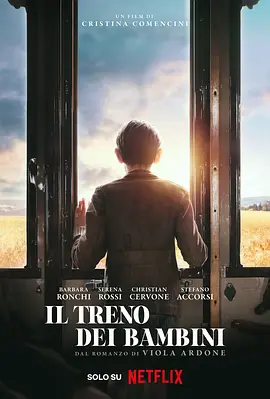
Treno dei Bambini 7.6

Treno dei Bambini

Drama History
7.6 Score 788 ratings May 29, 2025
Drama, History Christian Cervone, Barbara Ronchi, Serena Rossi, Stefano Accorsi
Aubrey We really need more female directors making films about mothers

Among the films I watched recently, the two most tear-jerking ones, "My Favorite Cake" and "Child's Heart Train", are both directed by women. To be honest, I didn't pay attention to who the director was before watching them, but the impression is not deceptive. "Even if there are no descriptive, bloody, violent, or war scenes", it can still make people want to watch it deeply. It is almost the work of female directors. I am not dragging it down, but the female perspective is different. The language of love is outlined in the details, but it is never too sensational. It is restrained at the right time and the camera is restrained. It is probably a kind of female psychological language: because women understand love too much, when they really depict the scene of love, they leave many meaningful fragments and aftertastes, instead of directly cutting the picture in front of you, which is as boring as uncovering the answer. There are many great male directors, including those with scene arrangement and grand worldview, but when describing love, they seem to lack a kind of imagination. It is so interesting. When watching a movie, you are tasting the director's subconscious projection and emotional pattern, and who is behind the camera lens? This emotion cannot be hidden. Or let's put it this way, when male directors film maternal love, they always use the theme of "sacrifice", that is, the mother dies for her child, or the mother sacrifices the happiness of the rest of her life for her child, or the mother gives up something. The purpose is that a mother must be strong, and motherhood contains too much content about self-sacrifice and carries too many private implications. However, stories of maternal love shot by female directors are always more "gentle" to women. Letting a child go is love, accepting a child is love, sometimes coldly pushing a child away is love, but "not forgetting to live your own life" is also love. Female directors are good at shooting women who "live according to their own wishes but also love their children." So I understand that we really, really need more female directors. We need more female directors to shoot "women". For example, the role of "mother" has always been shot by male directors, with all kinds of private goods in patriarchal narratives, and is suffocated by the definitions of "sacrifice", "virginity" and "selflessness". If more female directors shoot women from the perspective of women, then the definition of the word "mother" will move towards new connotations in female narratives. More female directors are filming "what is motherhood" instead of male directors defining what motherhood is. Whoever holds the camera to express ideas is a kind of power in itself.

Young Sheldon Season 1 9.3

Young Sheldon Season 1

Comedy
9.3 Score 163859 ratings Jun 24, 2025
Comedy Iain Armitage, Zoe Perry, Lance Barber
momo The Heartwarming Version of Sheldon

I have to say, compared to *The Big Bang Theory*, I prefer this spin-off. Watching *TBBT*, I always felt like Sheldon was a genius raised in an ordinary family and well taken care of—he’s a bit sarcastic, a little stubborn, has almost zero social skills, and reacts slowly or not at all to various emotions. But he's a cute, quirky, and normal person—he’s not antisocial, depressed, or crazy. *Young Sheldon*, as a family drama, really does a great job of showing Sheldon’s growth in a typical family. Although the family is loud and chaotic, you can still feel the love between them, and each family member feels real and fleshed out. The young actor perfectly portrayed the Sheldon I imagined as a child. I can truly believe that this is a genius, smart but awkward, with the innocence and cuteness of a child. Compared to the adult Sheldon in the early seasons of *TBBT*, young Sheldon has more humanity and childlike qualities. He would, for example, take off his gloves and hold his father’s hand when he hears that his dad is sad about being fired; he’d check out friendship books because he knows his mom is worried about him not making friends; he’d lose sleep when his dad is sick and in the hospital. This version of Sheldon is absolutely adorable—he's not emotionally distant and only focused on knowledge. He’s not a precocious child; despite his extraordinary intelligence, his emotional expressions are those of a child. His awkward ways of showing love are the most fun to watch. Maybe I just can't resist this kind of heartwarming family drama. The first eight episodes had so many moments of family bonding that really touched me. In episode 4, when Meemaw says in the car, "When you get older, you start losing hair, wetting the bed, blah blah, you become a baby again..." and in episode 8, when Sheldon says, “That was the best trip I ever had. I wish I’d told my father while he was alive,” I instantly teared up. Time, please slow down... little Sheldon, please take your time growing up...

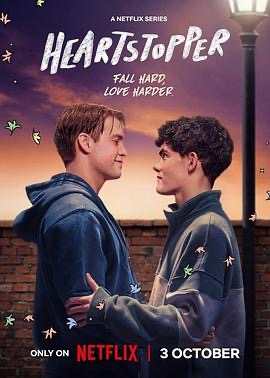
Heartstopper Season 3 8.6

Heartstopper Season 3

Drama Comedy Romance
8.6 Score 14311 ratings Jun 26, 2025
Drama, Comedy, Romance, LGBTQ Kit Connor, Joe Locke, Gao Xin
BenjaminTay An Impromptu Emotional Outpouring from the Queer Community

The third season of *Heartstopper* continues to delve into important themes such as eating disorders, mental health, childhood trauma, asexuality and aromanticism, social and political controversies surrounding transgender issues, and the adolescent exploration of gender and sexual orientation. It also tenderly addresses the honest communication between lovers, the first intimate moments between partners, the balancing act between romantic and friendship dynamics, the prioritization of self vs. the relationship, body insecurities, anxiety about the future, and the uncertainties that come with adolescence. This series feels like a gentle embrace, telling you: In the process of growing up, you will encounter all sorts of problems, and they won’t be easily solved. They may linger for a long time, and you will feel pain, confusion, and frustration. You may not know who you are, and you might even hate yourself or try to harm yourself. But don’t forget: as long as there are people who love you, and as long as you love those you care about, walking through life with these struggles won’t be as terrifying. I am someone who generally avoids debating, especially on identity politics issues—debating these topics exhausts me because I truly believe, even believe in the simple fact that "not everyone is born with an abundant sense of empathy, and not everyone is inherently kind." I never feel obligated to "save" or "change" the minds of people who are full of hatred or simply don't understand. This may be an ironic form of mutual disdain: in their eyes, the people in the communities I belong to, the ones I love, are "flawed"; in my eyes, the lack of empathy and the tendency to define "normal" based solely on one’s own life experience—labeling all who are different as "dangerous others"—is also a flaw that cannot be cured. But after finishing this series, with all these feelings stirring up inside me and all the life philosophies that have already formed wanting to burst forth, I want to organize my thoughts and speak out, not to argue, not to change the opinions of those I’ve mentioned, but simply because I have the right to, and so does our community—we have the right to raise our voices and not be silenced just because of how others treat us. Firstly, I know some people will say this show is too politically correct or criticize the show for mocking "overblown" political correctness in the West. This is because the show features a wide range of identity politics roles—gay, bisexual, transgender, asexual, aromantic, non-binary, and more—and none of the main characters are traditional heterosexuals. To those people, I just want to say: Go watch the heteronormative shows you love; this one is not made for you! For someone who has spent decades living in a world that is completely centered around heterosexuality, the audacity of this show to not place heterosexuality at the center, not revolve around it, and even ignore its existence, is shocking! Is the world collapsing now? Does it feel like the world is ending? Now you know what it feels like for us to watch those heteronormative films where the LGBTQ+ community is invisible, relegated to mere background, or presented as a strange curiosity. But you probably still won’t get it, because your empathy is zero. You lack the ability to imagine yourself in another person’s situation, and that is a flaw in your soul. To you, LGBTQ+ is just a few letters, a symbol, a label, a curiosity, a joke, or a topic for gossip—a "threat" to society. But to me, it represents each and every one of us who is living, breathing, struggling, and existing just like I do. We begin to question ourselves as we grow: Why are we different from the person society taught us we should be? Why do we feel differently about people of the same gender? Why do we feel trapped in a body that doesn’t belong to us? Why do we feel uncomfortable with the gender assigned to us at birth? We are often blamed for suppressing our true selves and choosing the so-called "normal" way of living, and we are also blamed for embracing our true nature. We live our entire lives in this contradictory space. The worst part is, we will never disappear from the macro level of human society because we are an eternal and objective existence. While I, as an individual, might disappear or die, there will always be people like me, struggling in the same contradictions, both in the past and in the future. Human individuals are not simply categorized as male or female, heterosexual or homosexual. Humans are complex biological and social animals, shaped by the physical, biochemical, genetic, hormonal, and neurological factors that make us who we are. We are also shaped by societal and historical experiences. Our bodies and souls, together, are a combination of countless factors that make us intricate. Each one of us has unique feelings and desires. These cannot be simplified into binary categories like male or female, heterosexual or homosexual. Some may find it absurd that there are so many labels, but these labels didn’t come first—they were created after there were people who couldn’t find themselves in the existing labels. We first discover our own feelings and desires, and only then do we use these labels to describe them. We don’t create labels and then try to force ourselves into them. Let me give you some simple examples. Some of us realized we didn’t feel attracted to the opposite sex, but instead felt something special for the same sex. Only later did we realize we belong to the LGBTQ+ community. Others may have realized they were asexual or aromantic after finding people with similar feelings. I could give countless examples, but those who understand will get it, and those who can’t or won’t understand will never grasp it. No one likes being labeled; we simply want the freedom to be ourselves. If these labels are just a joke to you, then please just go away and don’t interfere with our ability to live our lives happily and fully. Now, let’s get back to the show. I’m really glad to see a show centered on the growth of LGBTQ+ teenagers, and I resonate with it deeply. For straight people, the lives and struggles portrayed in the show may seem like a distant reality, as if a group of LGBTQ+ teens gathering together is something out of a fantasy. But for me, the struggles and confusions depicted are experiences I’ve lived through. We, queer people, do tend to gravitate towards each other, and that’s okay. I’ve experienced the same struggles as Charlie and his friends: confusion about sexual orientation, gender expression attacks, and the fear of coming out to friends and family. Charlie’s journey helped me understand my own growth and realize I’m not alone—there are many others like me. Isn’t that more meaningful than yet another clichéd straight romance story? Furthermore, even if the show’s characters and plot don’t align with reality or are a bit of artistic fabrication, so what? Art isn’t meant to perfectly replicate reality. You enjoy *Harry Potter*, *Spirited Away*, *A Chinese Odyssey*—works filled with magic, spirits, dragons, and souls—but the minute one or two characters from a marginalized group appear, you call it "political correctness," "forced diversity," or "out of touch with reality." But is it possible that there are many marginalized groups in our society? Is it possible that the world you envision, where almost everyone is cisgender and heterosexual, with only a tiny 0.01% being "abnormal," is simply unrealistic? I want to address another issue: gender and sexual orientation exploration. I can’t count how many times I’ve heard the argument that "promoting LGBTQ+ issues will influence teenagers" or that "many teenagers identify as LGBTQ+ just because it’s cool." First, is heterosexuality that fragile? If they watch or hear about LGBTQ+ issues, will they suddenly become LGBTQ+? Why haven’t heterosexuals surrounded by LGBTQ+ people "turned gay"? Second, being LGBTQ+ is not "cool." It means facing countless obstacles and harm from the outside world. It means constant self-doubt and potentially losing the love and support of your family and friends. It means never fully opening up, never letting down your guard, and often hiding parts of yourself. Being LGBTQ+ means not fitting into society’s "default" category. It means constantly explaining your identity. How can this be "cool" to teenagers? Sexual orientation is not a choice; it’s an inherent attribute of a person. If sexual orientation were a choice, no one would "choose" a life of exclusion and judgment. Because we can’t change our sexual orientation, we have no choice but to embrace our true selves. We don’t "pick" our sexual orientation like choosing from a menu. Sexual orientation is a deep, inherent part of who we are. We can only discover it as we go through life. Lastly, I’m tired of people trying to pit LGBTQ+ rights against women’s rights. First, rights aren’t a pie. Supporting one group doesn’t mean taking away from another. We fight for the rights of marginalized groups because they are oppressed and ignored. No one should be "non-default." Every person should be able to live as their authentic self. Second, simply denying the existence of transgender people doesn’t solve anything. The real issue is how to create a society where everyone feels respected and seen. In closing, I’ve shared many of my thoughts on identity politics that have been building up for years. While much of this seems unrelated to *Heartstopper*, these feelings were stirred up as I watched the third season. As I said earlier, I don’t enjoy debating these issues because I don’t seek to change anyone’s mind. I respect others for being who they are, even if that means they have flaws. But I also believe I have the right to speak out and be heard. These are my thoughts at this moment in time, and they’re worth recording and reflecting on in the future.

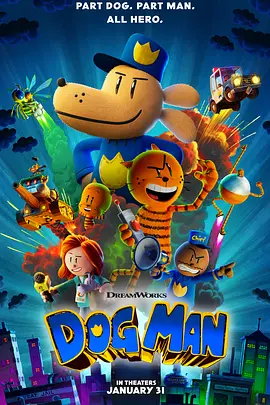
Dog Man 7.1

Dog Man

Comedy Action Science Fiction
7.1 Score 1103 ratings Aug 11, 2025
Comedy, Action, Science Fiction, Animation, Family, Crime, Fantasy, Adventure Peter Hastings, Pete Davidson, Lyu Bo, Lil Rel Howery
What has Guan Yaya Little Petey is cute.

Although it is a fan-oriented movie, it is very carefully produced. Not only is the painting style restored synchronously, but it also successfully presents many scenes and essences of the original comics, including the stories, lines and even backgrounds of multiple books that appear in the film. From time to time, the comic dialogues are directly drawn into the film across the dimensional wall, which is very creative. To be honest, Detective Dog is not easy to adapt. Although it is one of the most popular comic books among young elementary school students in the United States, teachers and parents have always had different opinions on it. But the director is very capable. He has achieved a smooth story line based on the collection of multiple stories. Some plots are even tear-jerking, and he grasps the three views in a simple and straightforward way: "We will be stupid and do bad things, but the kindness we release will eventually be treated gently by the world." It can be said that it is a rare popcorn movie for children that is easy, funny, positive and warm. Disadvantages: 1. Fan-oriented movie, pure American style, you may not get the fun and laughter of the story if you haven't read the original book. 2. It is suitable for children who still have a lot of strange ideas in their minds. Older children may find it childish/nonsense/inexplicable.

Hop 6.6

Hop

Comedy Animation Adventure
6.6 Score 11490 ratings Jun 25, 2025
Comedy, Animation, Adventure James Marsden, Russell Brand, Kaley Cuoco
Dr. Big Pancake Two funny parts

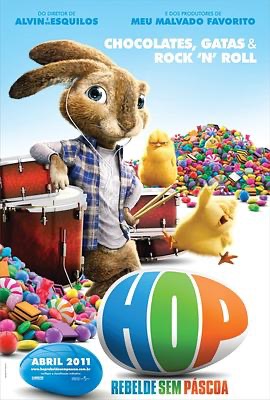
1. The rabbit in China is delivering Easter gifts, but is chased and beaten by a tough woman... Like the landlord lady, right!? 2. The rabbit is dressed as a mascot, and the older sister really likes it and takes advantage of it. The highlight comes when the rabbit is placed back on the bed, stands up, and mimics the movements of a wind-up toy saying "hug, hug." It's just so cute... Hehe, although the overall plot is quite weak, that second part really made me laugh. Is my sense of humor too low?

Until Dawn 6.1

Until Dawn

Thriller Horror
6.1 Score 13705 ratings Jun 24, 2025
Thriller, Horror Ella Rubin, Michael Cimino, Odessa Adlon
L Compared to the game, it turned out to be an extremely boring and mediocre work.

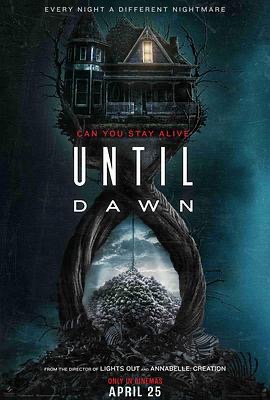
The film made some changes that didn't significantly affect the overall experience. The game had such a great story framework, and it had been tested by a large number of players. Yet, the filmmakers chose to completely innovate with a boring, slasher-style horror film that had no relation to the game. The director and writer probably just saw the name of the game and decided to make a film based on that, without truly understanding its essence. There’s a video I’ve seen before that explains why Hollywood has always failed in game adaptations. One of the main reasons is that they look down on games and consider them artistically insignificant. After watching this, I now believe that to be true. However, when they tried to rely on their own "innovation," what did they even manage to do? There’s also the repeated time loop concept, similar to Happy Death Day, but the funny part is that the first loop has a character kill everyone, and then in the second loop, things are completely different. In the second loop, they added a possession element, with a random monster showing up, and eventually, the monster transformation concept is introduced. In the third loop, it changed again, adding a water-drinking explosion concept. But this time, it finally somewhat related to the game, as they mentioned the mining disaster and the monster, Wendigo. However, this is completely different from the game's interpretation of the Wendigo. In the game, these creatures were once human but became monsters after eating their fellow humans and being possessed by an evil spirit. As the film neared the end, they arrived at the 13th loop, the final one. They recalled how everyone died before, then decided to enter a previously discovered tunnel. They ended up at the sanatorium, where Clover kills her mutated sister, and the others deal with the monster. Later, they talk to the psychologist, and in the patient's files, we see important characters from the game (the only two things related to the game). They then kill the doctor. There’s a new twist: mentally ill patients like Clover are the driving force of this place. After giving the doctor water, Clover changes the doctor, and they escape. Once the countdown finishes, everyone is saved. The gap between the movie and the game is as big as the one between Tsui Hark's The Eagle Shooting Heroes and the original novel. I really recommend playing the game. The game has a butterfly effect system where your choices affect the story. Plus, there are multiple plot twists throughout the narrative.

Nobody 7.8

Nobody

Action Crime
7.8 Score 186482 ratings May 26, 2025
Action, Crime Bob Odenkirk, Alexi Serebryakov, Connie Nielsen, Christopher Lloyd
Pengyoudiemeng Review of Little People

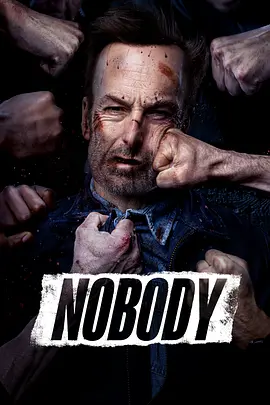
"Little People" is a crime action film released in 2021, directed by Ilya Naishuller and starring Bob Odenkirk, Connie Nielsen, Alexi Serebryakov and others. The film tells the story of the protagonist Hutch (Hutch Mansell), a retired agent killer who longs for a peaceful life, but in order to protect his family and children, he has to get involved in gang disputes again. I was deeply impressed by this movie, especially its portrayal and understanding of "little people". People who struggle at the bottom of society are often overlooked, and this movie is a loving tribute to them. The character of Hutch made me see the helplessness and tenacity of an ordinary person in the face of life pressure and danger. Although he was a top agent, after retiring, he just wanted to live an ordinary life. However, for the safety of his family, he had to wield his weapons and become the "nobody" again. The action scenes of the film are very exciting and exciting, which makes people sweat. The acting is also excellent, especially Bob Odenkirk, who successfully portrays a character with both wisdom and courage. In addition, the film's music and photography are also very good, creating a depressing and tense atmosphere for the film.

Little Forest: Summer & Autumn 9.0

Little Forest: Summer & Autumn

plot
9.0 Score 462301 ratings Jun 27, 2025
plot Ai Hashimoto, Takahiro Miura, Mayu Matsuoka
LiBOBO What is life like in the Japanese countryside?

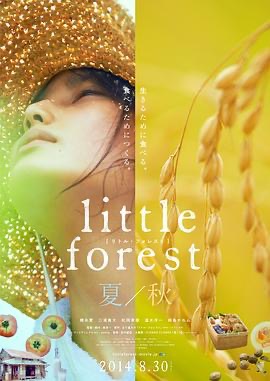
Rather than a movie review, this could be considered a travelogue. In the summer of 2016, I watched *Little Forest*, and then bought a ticket to Japan, where I stayed in the countryside for three months, all the way until the winter of 2017. I initially thought *Little Forest* was a romanticized film, but later I realized it actually follows a more realistic style. **In winter:** In the summer, I brought two friends to visit again. Japan is one of the most developed countries in Asia, so its infrastructure is very well-developed. I often tell others that even the toilet seats in the rural areas of Japan are heated. Transportation is convenient, most households have cars, there are trains, convenience stores, internet access, and even Amazon logistics work seamlessly. Even rural schools have highly advanced basketball courts, just like the ones in *Slam Dunk*, even though the local junior high only has 70 students and the high school only 200. Cafés, convenience stores, supermarkets—everything you need is available. **Japanese rural cafés and children:** When I use the term "rural," I fear it may cause misunderstanding, so I'd like to clarify: The "rural people" in Japan are different from the Chinese concept of "乡下人" (country bumpkins). In Chinese, "乡下人" often carries a derogatory tone, implying people who are uncultured. However, in Japan, "rural people" simply live in the countryside. Most of the people I met had received higher education, many had studied abroad, and their work quality surpasses that of many developing countries—not only in terms of the product's quality but also in terms of aesthetic appeal. Just looking at pictures of food can show the difference in quality. Later, I brought friends to experience the Japanese countryside. But what truly moved me about rural Japan wasn't the developed infrastructure or the refined experiences. It was, beyond all these external things, the way the local people think and live. After living in a big city for a while, you start to notice that many people around you are anxious—anxious about income, career, the future, and relationships. But in *Little Forest*, despite the busy lives of the locals, everyone plays many roles, yet their mental states are full of vitality. While people in the city may feel drained, apathetic, or indifferent, those in *Little Forest* are vibrant, energetic, and full of life. **Participating in food preparation:** I met many people in *Little Forest* and heard one story. One girl, with a good background, had studied abroad, attended school in Tokyo, and even interned at the UN. But when I met her, she was out in the forest, hunting wild boar. I was curious why she was doing this. She explained that the wild boar were damaging the local crops, and she noticed that the local farmers had a unique way of preparing wild boar, which resulted in very delicious dishes. So, she thought maybe she could develop a wild boar meat industry to help reduce crop damage while creating a new brand for the area, opening up a new economic industry. At first, I thought she was just talking big. But when I saw her again a year later, she had already sold her wild boar meat to Tokyo’s top restaurants, and her story had been featured on NHK’s local TV station. **When I first met the wild boar girl:** Later, I met many more interesting people like her—some wanting to revolutionize education, others starting new kingdoms, some focusing on revitalizing the area, developing new food varieties, brewing, farming rice, protecting the mountains and forests, and so on. Unlike most people I’ve met in China who just shout slogans, these people were actually putting their words into action. I also met a girl who was a lot like the main character in *Little Forest*, played by Ai Hashimoto. She worked hard, creating food in a refined and elegant manner. When I met her, it felt like stepping into a movie. Wherever she was, the air seemed gentler, filled with beauty. Having traveled to many places, over a dozen countries, and more than 200 cities, the tranquility of rural Japan and the gradually emerging upward, free-spirited atmosphere really resonated with me. I hope that, if I get the chance, I can bring more people to the *Little Forest* and let them discover the truth about this place. Because it's a place that makes you say, "Wow, there are people who live like this." It's also a place where you can quietly reflect on your own life.

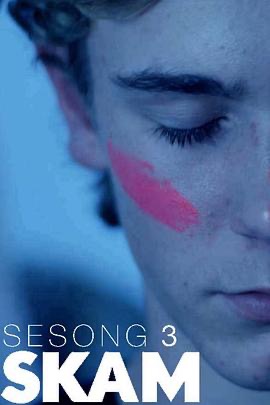
Skam Sesong 3 9.5

Skam Sesong 3

Drama Romance LGBTQ+
9.5 Score 162029 ratings Jun 25, 2025
Drama, Romance, LGBTQ+ Talia Sandvik Møller, Henrik Holm, Josefine Frida Pettersen
The Boy with the Flower I won't start wearing mascara or tight clothes just because I have a crush on a boy.

You can really see how inclusive the Nordic social environment is. The pressure on Angel comes mostly from within himself, aside from his mother's intense religious beliefs. His father, the girls he’s been with, his love-hate relationship with his black friend, even his Muslim classmate—all of them accept the reality faster than he does. Before confirming his relationship, Angel goes to take a "gay test," which shows less than a 20% likelihood—basically straight. There are a few quick questions in the scene that are quite interesting, like his spending on haircuts, his preferences in fashion, and his views on certain male celebrities. His initial reactions are all very... traditionally straight. The first time he comes out is to his gay roommate, nervously adding that he's with Even, but it doesn't mean he's gay... Being gay isn't a bad thing, but he's not "that kind" of gay. People tend to have this stereotype of what being gay should be, and it's unfair to those who don't fit that mold. Just because he likes Even doesn’t mean he’s going to start wearing mascara, tight clothes, or joining pride parades... Ultimately, he’s just scared of being labeled, whether it’s good or bad. But Even seems to understand him. At a party when they first meet, Emma says, "I love gays, they're so interesting," and Even very seriously disagrees, saying, "Your logic is wrong. That’s like saying all Muslims are terrorists." Emma says, "Oh, it’s different. Interesting is a positive word," and Even replies, "No, logic is logic. Not all gays are interesting." Exactly, not all straight men don't dress well. Not all boys like toy cars. Not all girls like wearing skirts. It’s also really interesting to think about: which stereotype is easier to get rid of, gender stereotypes or sexual orientation stereotypes? I’m grateful for this show’s contribution in challenging the stereotypes people have of LGBT people, those with mental health issues, religious believers, and other minorities. Julie Andem is the cutest screenwriter!

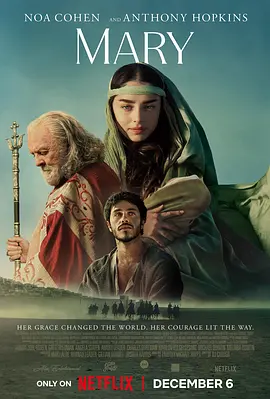
Mary 6.0

Mary

Drama
6.0 Score 644 ratings Aug 11, 2025
Drama Anthony Hopkins, Noah Cohen, Ido Tacco, Shila Vidor
Jingshui Personally, I feel that this film is a complete insult to religion.

The costumes and props seem very delicate, but that's all. The core of the film's story is completely nonsense. The film's description of the sacred religion has neither the logic of God, nor the logic of man, nor the logic of history. The film simply and crudely caters to the legend without thinking about it, so that the characters have no growth, few deeds, and the suffering is false. It also seems to be whitewashing ancient Judaism. Although I don't believe in religion and only have a little understanding of religious history, I can see that this film is not sincere. Not only does it lack real religious content, but some of its content is contrary to its religious history. It is a product of political correctness from beginning to end.

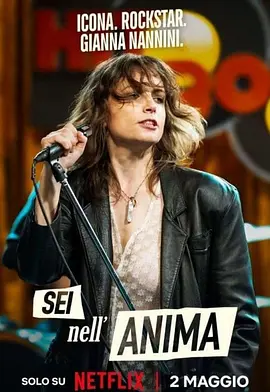
Sei nell'anima 7.0

Sei nell'anima

Drama Music Biography
7.0 Score 273 ratings Aug 11, 2025
Drama, Music, Biography Letizia Toni, Selene Caramazza, Maurizio Lombardi, Noemi Brando
Xiaoyue Everyone can make different choices. It depends on whether you have the courage to break through difficulties and the tenacity to hold on to your principles.

The film uses powerful visual language to reveal the violent nature behind this beautiful ideology. On the surface, the film tells a coming-of-age story about youth, rebellion and self-identity; in essence, it quietly presents how beauty is constructed as a tool of social discipline and the painful struggles that individuals experience under this discipline.

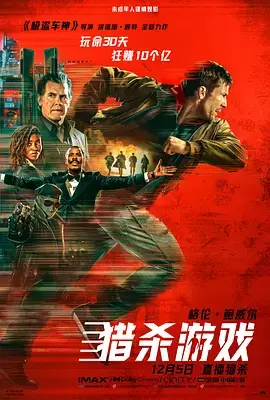
The Running Man 5.8

The Running Man

Action Sci-Fi Thriller
5.8 Score 10580 ratings Mar 5, 2026
Action, Sci-Fi, Thriller Glenn Powell, Josh Brolin, Lee Pace, Michael Cera
Douyou_FDHrafYfM For the average viewer, this movie is definitely passable and not bad. Unfortunately, there are too many pretentious people on Douban!

I went to see it in the cinema today, and it wasn't as bad as I thought. The plot and action weren't too embarrassingly bad; I'd give it a 7 out of 10. It's a shame that Douban is full of pretentious people who mindlessly belittle it to make themselves look superior. My disillusionment with Douban started over ten years ago with a pretentious movie called *Mr. Six*. The entire film was pretentious with not a single real fight scene. The action scenes and plot suspense were nowhere near as good as *The Hunt*, yet a bunch of pretentious people on Douban gave it an 8-point rating, which shocked me. From then on, I realized Douban is a haven for pretentious people. Screw you pretentious bastards!

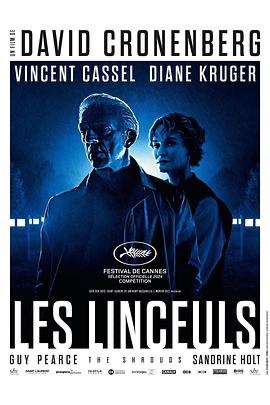
The Shrouds 6.0

The Shrouds

Drama Sci-Fi Thriller
6.0 Score 2443 ratings Jun 25, 2025
Drama, Sci-Fi, Thriller, Horror Vincent Cassel, Diane Kruger, Guy Pearce
momo Cronenberg has regained some edge

Since *Crash*, Cronenberg has moved away from focusing on the bodily externalization of horror and instead internalized them (future crimes are scripts from the past). *Shroud* combines mourning behaviors with the fear of conspiracy theories. Both point to the same thing: it damages the body, infinitely enhancing the horror, always attempting to uncover the truth. However, as multiple truths open up, they only highlight the subject’s incompetence. To mourn, we have to experience more; to explain the conspiracy, we have to experience more. This, in turn, leads to the enhancement of meaning, but it delays the understanding of the conspiracy and the mourning process, making it impossible to end. Yet, everything remains endless and inexplicable, even the simplest fact: a person has died, and now only a body remains. That person has vanished from this world, no longer existing. The visual body and the tactile body, the truth expressed through media (mobile phones), and the truth expressed through AI interweave. Throughout the process, it has become connected with everything. The mourning behavior involves biology, artificial intelligence, computers, economics, and geopolitics, all following a winding path, just like the production of conspiracy theories, but it never ends anything. Only letting go is considered an end. Mourning, as a form of hatred, internalizes the deceased within oneself, punishing oneself, so that the one who cannot be harmed can no longer be hurt. At first, we may think that the husband is completely loyal to his wife, but later we realize that it’s not that simple. He’s trapped in a terrifying fantasy about whether his wife betrayed him, which is precisely a form of conspiracy theory. But the ex-husband, a conspiracy theorist, can’t truly attract his sister, who is madly in love with conspiracy theories. Clearly, he’s a real fool, and this type of fool is not loved by his sister. This also points out that mourning behavior itself follows this kind of conspiracy theory trajectory. I’ve seen the same behavior in my mother, who came up with various explanations for her sister’s death. But without exception, she also showed a tendency for conspiracy theories, unwilling to give up on certain perplexities, repeating them, unable to cross over or let go. (Personally, I don’t think some pain must be let go.) We adopt such an indirect strategy. Mourning only points to the body, but mourning rejects the body. Just as AI once said, when wrapping oneself in the shroud, the experience is unrelated to the body because the body belongs to the deceased, and the shroud is what the deceased used. It’s not about the user’s tactile skin and the touch of the shroud, but about the user’s visual experience, seeing the process of decay through a phone and screen. As the user, you can only view from the outside and can’t wear the shroud yourself. In this process, the body is just a body. Therefore, the result of mourning can only be letting go. Unless we’re forever immersed in this conspiracy theory. When the protagonist finally gives up on the impulse to understand the conspiracy, he also lets go of his wife’s body. The only thing we get is simply that the person has died, and that’s it. Everything else is just mourning or letting go. This kind of story still has certain flaws, as Cronenberg’s films often end abruptly or completely dissipate by the end. 1. Cronenberg’s old white male interests remain. 2. Cronenberg’s intimate scenes are still stunning. 3. Cronenberg’s thriller handling remains stimulating. 4. Cronenberg embraces digital photography techniques (which means that the "idiotic dog poop" special effects in the star map were intentional, especially for a master of suspense like Cronenberg). 5. Cronenberg seems to have fully immersed himself in films with an overwhelming amount of dialogue.

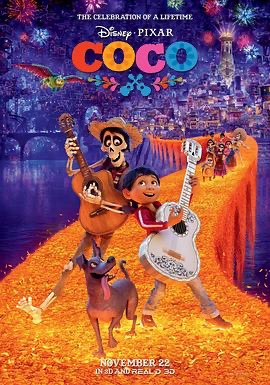
Coco 9.1

Coco

Comedy Animation Music
9.1 Score 1898181 ratings Jun 26, 2025
Comedy, Animation, Music, Fantasy Anthony Gonzalez, Gael García Bernal, Benjamin Bratt
"Fortunate Deer" "Perhaps you would like to learn about the Mexican elements in the film."

This article offers a deep reflection on how the film *Coco* has fostered a strong sense of connection to Mexico’s upcoming **Day of the Dead**. The Pixar creators put in a lot of effort in preparing for the film, and after six years of production, the film beautifully blends many Mexican cultural elements with a heartwarming story. As the director said, “We wanted to show a Mexico that’s different from what you see in the news.” If this article helps people gain a little more understanding of Mexico or gives them a moment of "getting the joke" while watching the movie, that would be a very happy thing. At the start of the movie, the **papel picado** (paper cut-outs) can be seen, which is very common in Mexico. Recently, when visiting a ranch where a wedding was about to take place, the corridors were lined with white papel picado featuring ring designs, symbolizing purity and joy. Interestingly, this is somewhat similar to Japan, but the opposite of China. During holidays like national festivals or Day of the Dead, colorful papel picado often decorates the streets. Mexicans really love color. It’s common to see houses painted in vibrant hues, with entire blocks of streets creating a striking visual spectacle. **Guanajuato**, often referred to as the "city of God's spilled paint," is known for its beautiful streets filled with color. Later, the movie features **tamal**, a traditional Mexican food made by wrapping chicken or pork, vegetables, chilies, and sauces in a thick layer of corn flour and steaming it in corn husks. This is similar to China’s zongzi. Although corn is a staple food in Mexico, many Mexicans don’t particularly enjoy tamales due to the thick corn flour layer. According to sources, this type of "dumpling" can also be found in many Central and South American countries, with slight variations in preparation and ingredients. The family in the film, the **Riveras**, has been in the shoe-making business for generations. This ties into Mexico’s economy, where family-run small and medium-sized businesses are the backbone. Many traditional family-run workshops in the past were shoe-making businesses. In the movie, **Mamá Imelda** raises her daughter single-handedly and establishes the family’s livelihood. In Mexico, this is very common. Although Mexico has a "machismo" culture (strong male dominance), many aspects of Mexican society reflect matriarchal traits, where women often take on greater responsibility for the family’s daily life and decisions. As Mamá Imelda says, "He wanted to sing, to reach bigger stages, but for me, putting down roots in life and focusing on family was more important than music." A conversation with a 90-year-old woman at home, similar to the character Mamá Coco, resonated with this sentiment. Once, she mentioned, "Los hombres no valen nada" (Men are good for nothing). In her younger days, women had to do everything—taking care of the house, managing inside and outside, while the men were mostly "figureheads," which aligns with what’s portrayed in the film. The **Plaza de Mariachi** that appears in the film is a reference to the traditional Mexican music genre, **Mariachi**. Musicians and singers wear **sombreros**, which have large brims designed to block the sun. **Mariachi music** in the film is full of depth and passion. The Spanish versions of songs like *Recuérdame* and *Como Loco* are emotionally intense and much more powerful than their English counterparts, which is typical of Mexican singing style. In the film, the people in the small town gather in the plaza for various activities, reflecting how life in Mexican villages often revolves around community spaces. Much like rural life in China, villages remain a core administrative and geographical unit for Mexicans, especially in the south. Mexico is home to over 100 **Pueblos Mágicos** (Magical Towns), where farming, livestock, and handicrafts are common professions. The character **Ernesto de la Cruz** in the film is inspired by the famous actor and singer **Pedro Infante**, a beloved figure in the golden age of Mexican cinema. Mamá Imelda, the oldest family member in the movie, is modeled after the legendary actress **Maria Félix**, also from the golden age of Mexican cinema. An amusing line in the film is when the boy Miguel says, “We’re probably the only Mexican family that doesn’t like music.” This is very accurate; Mexicans are passionate about music, and even young people enjoy traditional mariachi. The town in the movie where the living people reside is called **Santa Cecilia**, which doesn't exist in real life but is named after the Mexican patron saint of music. In the movie, there’s also a funny dog named **Dante**, who plays an important role in the Day of the Dead tradition. Dogs are believed to guide souls in the afterlife, helping the departed cross into the next world. The dog cannot be too dark, or people would not be able to see it on the journey; nor can it be too light, as it would refuse to go to dirty places. This idea reflects the cultural view that the underworld is a messy place. Dogs have always held a significant role in Latin American cultures. In **Teuchitlán**, Jalisco, where there is an ancient civilization believed to predate the Maya and Aztec civilizations, dogs were often found in graves, buried as companions to the deceased, just like China’s **Terracotta Warriors**. **Guanajuato**, a city known for its stunning scenery and good security, is said to be the inspiration for the afterlife world in the film. A towering skyscraper in the afterlife world depicts the current state of Mexico: the less-developed southern regions, the commercial center of the middle, and the industrial north. In the movie, **Cempasúchil** flowers form a bridge that souls use to travel back to the living world. These marigold flowers are said to symbolize the sun’s rays, guiding the dead home, making them a prominent decoration for the Day of the Dead. A scene that deeply moved a young girl watching the film was when it seemed that the deceased could truly return to the world of the living by crossing a bridge of marigolds. **Alebrijes** are mythical creatures that also appear in the movie. The story of how they originated is fascinating: a craftsman, while very sick with a high fever, dreamt of a group of wild beasts, shouting "alebrijes," and upon waking, he spent days creating the creatures from his dream. This eventually led to **Frida Kahlo** and **Diego Rivera** purchasing them, and they became iconic in Mexican culture. In the movie, **Frida and Diego** appear briefly, showcasing their enduring cultural significance. The appearance of **El Santo** in the film, a legendary figure in Mexican **Lucha Libre** (freestyle wrestling), is also noteworthy. Lucha Libre is an important part of Mexican life, where wrestlers not only fight but also put on performances for entertainment. The crowd's interaction with the fighters is a major part of the show, and as the saying goes, "the wilder, the more enjoyable." The underground **cenote** (a natural well) seen later in the film is an iconic Mexican geographical feature, specifically in the Yucatán Peninsula. The ancient Maya believed cenotes were gateways to the underworld and used them for human sacrifices. Finally, the story unfolds during **Día de Muertos** (Day of the Dead), an incredibly important day for Mexicans. On this day, the spirits of the deceased return to the living, transcending life and death. This reflects the Mexican attitude towards death: it is not seen as a sorrowful event but rather as a celebration, as the deceased enjoy the afterlife, with music, dance, and parties. They return annually to reunite with their loved ones, so no one truly says goodbye. In 2008, the **UNESCO** recognized Día de Muertos as an intangible cultural heritage. The Mexican practice of remembering the dead can be traced back to **Aztec** traditions, and over time, the celebration blended with European religious customs during colonization. During Día de Muertos, people often paint themselves as skeletons, like the way **Héctor** paints **Miguel** in the movie, and celebrate together with their unseen ancestors. The directors describe Mexico as a “vibrant country filled with culture and warm people,” and I wholeheartedly agree.

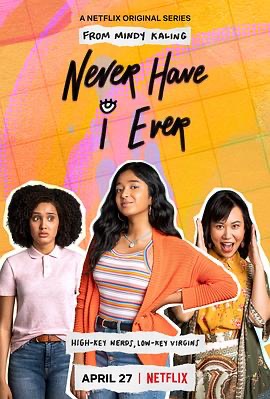
Never Have I Ever Season 1 8.2

Never Have I Ever Season 1

Comedy
8.2 Score 60297 ratings Jun 23, 2025
Comedy Maitreyi Ramakrishnan, Lee Rodriguez, Ramona Young
Althea Borjigin Brown skin girls

When teen series go beyond just talking about romance and instead explore deeper themes like cultural fusion, the constraints of tradition on women, and embracing our individuality. We are growing up in an era where beauty standards are very "linear": white! Thin! Society’s stereotypes of beauty have labeled so many things for girls. No matter your skin color, body type, whether you’re gay or asexual, we are all beautiful. Every girl should look in the mirror and say aloud to herself: "You are beautiful, your tan skin is beautiful, your muscular body is beautiful, your hijab looks beautiful, and your curly hair is beautiful! Most importantly, Devi! You look beautiful in that saree during Ganesh Pooja." When Devi finally reconciles with herself, her mom, and her friends, I was so happy. Devi has the hardworking spirit of a traditional Indian girl, as well as the quirky charm of an American sweetheart. In my eyes, every girl in this show is beautiful! My dear girls, we’ve all looked at ourselves and thought: my nose should be higher, my skin should be lighter, maybe if I were thinner, everything would be better. But those things we want to change are what made us who we are!! Just like Devi, who said she didn’t want to be Indian, but when spreading her father’s ashes, she prayed devoutly with the Sanskrit chants. She said she wanted to be a "cool kid", but she turned red-faced, passionately debating for Equatorial Guinea in Model UN. Sisters, I want to say: you are beautiful just as you are, you are beautiful when you don’t care about what others think, you are beautiful when you are proud of your culture, you are beautiful when you show care for your friends and family, and you are even more beautiful when you work hard for your dreams! Don’t change yourself to fit into society or please others. Please lift your head, stand tall, and unapologetically be yourself!

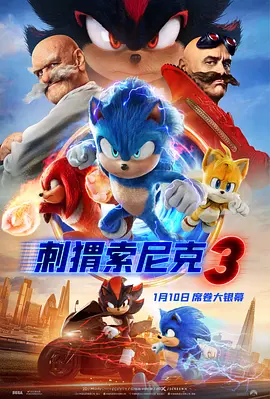
Sonic the Hedgehog 3 6.2

Sonic the Hedgehog 3

Comedy Action Science Fiction
6.2 Score 9970 ratings May 28, 2025
Comedy, Action, Science Fiction, Animation Ben Schwartz, Jim Carrey, Keanu Reeves, Idris Elba
Son of a Rabble Escaping from a similar vortex: Sonic the Hedgehog 3

When the movie's Easter eggs are released, the concept of similarity becomes a thread from between species to between bionics and species. The appearance of the Easter egg has nothing to do with Sonic, but the image that is quite similar in outline is a robot. In other words, it forms a very obvious representational similarity, which, in Deleuze's words, is a body without organs. Of course, it is to prepare for the fourth Sonic the Hedgehog film, and perhaps also to open up a parallel world, telling a story of alternating cuteness and fear. In "On Cuteness", Inuhiko Shihoda talked about how cute and scary are adjacent in Japanese. Think back to whether this is also true for the movie? Yes, although Dr. Eggman, played by Jim Carrey, and his grandfather have a strong affinity, the audience can still regard them as a control group of a complex relationship that goes on different paths. By the time the third part begins, Dr. Eggman has regressed into a very typical middle-aged otaku. He possesses advanced and cutting-edge science and technology, but the mechanical crab stays on the bottom of the sea and no longer travels. He has given up the idea of ruling mankind, and instead pursues his own inner peace zone. So we see the show he watches, in which brothers compete for the same person but the pictures are in black and white - he holds a very obvious decisiveist idea, if I go out I may hurt others or be killed, so I don't need to go out of this door - what's more, cutting-edge technology has provided him with enough convenience and economic strength to enjoy a lifetime, so why should he pick a fight with the hedgehog? But his grandfather has been immersed in the great grief after the loss of Maria. Of course, there is also the broken belt that imprisoned him for 50 years. In this movie, grandfather is not only a relative, but also means a mark of values, that is, because of the change of time, he no longer belongs to this world, so what grandfather thinks of is the third way besides domination (control) and regression (self-entertainment), that is, to destroy everything. This sounds a lot like what Obito from Naruto did. To be precise, it was the fragmentation of the individual narrative (the death of Lin/Maria) that led to a major upheaval in the grand narrative (the Fourth Ninja World War/the destruction of humanity by super weapons). This is what Dr. Eggman's grandfather and Shadow are doing. It's just that Dr. Eggman's team relied on Jim Carrey's comedic actions - especially the scene where the two danced in the red lasers, and the scene where the two fought with mechanical elephant-like animals - to briefly dispel the otaku logic of "socialization = harm". In this case, decisiveness becomes inevitable, "even if it is wrong and hurts others, you have to choose a certain position." This is what Shat did to Tom. He almost killed Tom by mistake (shown in the Easter egg, wrapped in a bandage), and a similar scene of one party trying to wake up the dead by howling in pain was staged again. The movie was afraid that the audience would not remember this similarity, and deliberately added a similar composition of Shat calling Maria. At the beginning, Shadow also insisted on a decisive stance, seemingly to atone for his sins, and also to make Sonic empathize with his pain. After both sides used emeralds to enhance their combat power, when Sonic was clearly at a disadvantage, he mentioned Tom's name again. This led to Sonic's brief and angry outburst, and he beat Shadow to the moon and back to his original form. Yes, the similarity runs through the whole story. Maria's death was not inevitable, but General Walters (the commander) blocked the explosion caused by the soldier's mistaken shooting - the same is true for Shat, he didn't want to kill anyone except Walters' impressive face. And Tom happened to use technology to change his face to become him - this is another similar manslaughter. Of course, Shadow and Sonic basically look the same and are the same species (hedgehogs). In contrast, Knuckles and Tails are definitely not hedgehogs, even though they are both colorful alien creatures (animals). In his aesthetics of double images, Kilar specifically mentioned that the two parties of imitation have a three-stage relationship. As double intermediaries, the two parties are similar in appearance (hedgehogs of the same species); as double constraints, the two parties are emotionally desireful (if Shat does not accidentally hurt Tom, Sonic will not be able to empathize with him. And from the bottom of his heart, Shat does not want to do this); as a doubled relationship of imitation, if there is no outsider, the internal imitator is unaware (it is also Tom's words at the beginning of the movie that awakened Sonic in revenge). In this process, Tom's voice and face are almost a "ghost" form that frees Sonic to return to Shadow's old ways. Let's talk about Dr. Eggman and his grandfather. The grandfather pretends to be immersed in the parent-child relationship with his grandson to make up for the pain of his close relationship with Maria. The clever point is that the virtual scene technology has actually hinted at all this, and the stone agent, an outsider, has been observing it all the time. The apocalyptic disaster caused by Shadow and Dr. Eggman returns to normal life after their self-sacrificial act. In other words, we can regard this live-action movie as a re-read of the game, as Sonic is a character in the game series. At the beginning of the movie, Sonic and his two friends are competing in a game, a running race - this race is actually to re-emphasize the preciousness of daily life. At the finish line is a "victory declaration" brought by a virtual holographic projection, and it is also a surprise "Earth-birthday" held by his family for him. At the end of the movie, the race is recreated, but their running has no end. "Running", the most common scene in the game, has also become the "psychology" that constantly generates scenes in the movie subtitle animation. Only by running continuously (quite like Forrest Gump) can the world become full in the runner's vision. It suddenly occurred to me that "The Girl Who Leapt Through Time" will be released in China soon. This animated film from decades ago is also coming to the big screen in a running manner. But is this kind of running a "phenomenon" or an "embodied" thing? It's like if the Sonic Team took off the more subjective title of "Sonic", whether it's Knuckles or Tails, they can run, so whether it's a gamer or an otaku, they can all run, right? Running itself is not the ability of otaku to "question society", but the perception after losing this ability - so the change is only in the individual (Sonic's personal growth), not in ideology (in the movie, it is the secret service with weapons of destruction). The more obvious contrast is Jim Carrey, in The Mask in 1994 (the prevalence of fanaticism theory) - The Truman Show in 1998 (breaking through the ideology constructed by the media) - Bruce Almighty in 2003 (crazy deviation and return to daily life) - Eternal Love in 2004 (The Third Retention and the disappearance of daily life) - Mr. Popper's Penguins in 2011 (when cute pets become the main body of daily life) - and now in the Sonic the Hedgehog trilogy, Jim Carrey has gradually given up the weapon of criticism and used the criticism of weapons

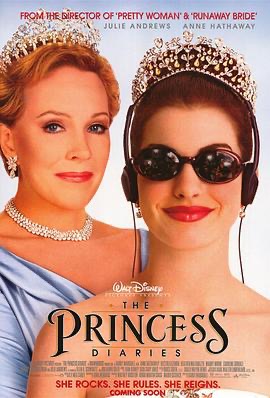
The Princess Diaries 7.6

The Princess Diaries

Comedy Romance Family
7.6 Score 362667 ratings Jun 23, 2025
Comedy, Romance, Family Julie Andrews, Anne Hathaway, Héctor Elizondo
wonderAA Why me?

The most memorable line is when Lily's brother Michael, at the final dance, takes Mia to the garden and asks her: “Why me?” She replies, “Because you saw me when I was invisible.” In this world, there are few who have eyes that only stop for you. Before the dust is swept away and the veil is lifted, how many would truly recognize that you are my princess... In this world, hidden and unnoticed for many years, like a flower hiding in the corner, waiting only for your arrival to bloom its beauty for a lifetime...

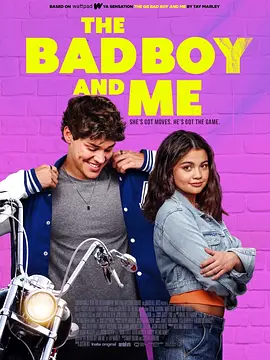
Sidelined: The QB and Me 6.9

Sidelined: The QB and Me

Drama Romance
6.9 Score 421 ratings May 16, 2025
Drama, Romance Noah Beck, Siena Agudong, Drew Ray Tanner
Zyr The charm of movies Movies are like a mirror, reflecting the brilliance and darkness of human nature.

In the interweaving of light and shadow, we see the diversity and complexity of life. Wonderful movies always touch people's hearts. Whether it is the ups and downs of the plot or the delicate portrayal of the characters, people are immersed in it. Movies are not only entertainment, but also an art. It brings us thinking and enlightenment with its unique perspective and expression. Every movie is like a dream, allowing us to temporarily escape from reality and enter a wonderful world. Good movies are worth savoring repeatedly, and new details and profound meanings can be discovered every time you watch them.

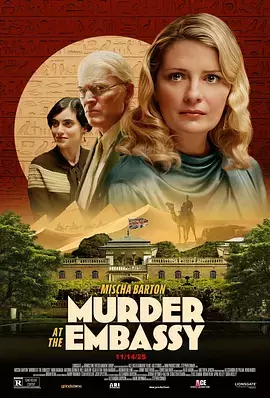
Murder at the Embassy 3.0

Murder at the Embassy

Action Mystery Thriller
3.0 Score 100 ratings Mar 5, 2026
Action, Mystery, Thriller Mischa Barton, Raha Reberi, Richard Dillane, Mido Hamada
root Miranda is a born detective, possessing absolute memory.

Miranda is a born detective, possessing absolute memory. The story follows a locked-room mystery: a murder occurs in the heavily guarded British Embassy in Egypt, and the killer must have stayed overnight among the embassy's inhabitants. Miranda, with her absolute memory, is invited to investigate, discovering signs of Nazi activity in Egypt, and ultimately revealing that the killer is the British ambassador bribed by the Nazis… The story also features a lesbian daughter, and I always felt the ambassador's words were loaded, and I was right, haha.

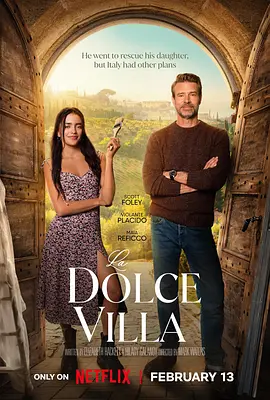
La Dolce Villa 6.3

La Dolce Villa

Comedy Romance
6.3 Score 620 ratings May 29, 2025
Comedy, Romance Scott Foley, Violante Placido, Maya Refico, Giuseppe Futia
berean Beautiful scenery and beautiful people, nothing new

Eric, who lost his wife, worked hard alone in the United States; his only daughter fell in love with a villa worth "one euro" in Italy. His loving father flew to Tuscany to stop the sale of the property. Unexpectedly, the father fell in love with the beautiful local mayor. The shabby house looked its most beautiful after careful decoration, and everyone was happy. Although I could predict the ending after watching it for five minutes, I was still very happy to finish the movie because it was so beautifully filmed! [两個心R]Highlight 1: Both the male and female protagonists are extremely good-looking. The female protagonist looks a bit like Sha Lianna, but more beautiful. [Balloon R] Highlight 2: The scenery of Tuscany is also very charming, whether it is the buildings, hillsides, or the sea, everything is beautiful. No wonder the three sisters Antonia sit in the hot springs and play around every day. I envy them so much. I don’t even need to learn this life philosophy of “doing nothing and enjoying leisure time”. I’m already familiar with it [shy R] [Wither R] Complaints: The plot is a bit clichéd, the conflict and reconciliation between father and daughter are too smooth. It would be better if the attitude towards life could be explored in depth. It seems that the whole movie is too much for Valentine's Day.

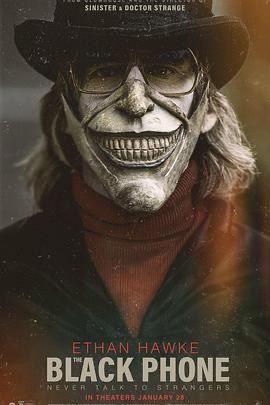
The Black Phone 6.8

The Black Phone

Horror
6.8 Score 27781 ratings Jun 25, 2025
Horror Mason Thames, Madeleine McGraw, Ethan Hawke
Archimedes Catches Up with the Tortoise The Villain Grabber's Origin: Dysfunctional Family and Tragic Fate

This film is based on Joe Hill's 2004 short story of the same name. Hill's father, Stephen King, had already written *IT*, so it's not surprising that both father and son are involved in mysterious child abduction cases. To adapt a short story into a full-length film, the creators added many new elements. The original portrayal of The Grabber's behavior wasn’t altered, though his self-introduction was slightly modified—he initially presents himself as a "part-time clown" but in the movie, it becomes "part-time magician." Nonetheless, the film still carries echoes of *IT*. The Grabber is played by Ethan Hawke, who also portrays a villain in the Marvel series *Moon Knight* in the same year. The original story mentions Grabber’s real name is Albert Shaw, but offers little detail about his background. After Finney answers the phone, we learn that only he and the Grabber can hear the phone ring. The Grabber denies it, claiming it’s just static. This reminds me of a moment in the movie when Gwen's father lashes out at her, forcing her to repeatedly deny her psychic abilities, making her question her own powers. Interestingly, Finney's family also shares the last name "Shaw," which leads me to speculate that the Grabber and Finney's younger brother, Max, could be reflections of the main characters' sibling dynamics. In The Grabber’s childhood, he was likely abused by his father or another family member due to his psychic abilities. The film is set in 1975, and looking back 20 to 40 years, we wonder what kind of family would install a phone in the basement. Perhaps the basement was once the Shaw family's central gathering place, which would explain the presence of the phone and toilet. However, as Grabber began hearing phone calls that no one else could hear, the elders cut the phone line and gradually stopped visiting the basement. Whenever Grabber misbehaved, he would be locked in the basement. When he escaped, he would receive a violent beating. This is the origin of the "naughty boy" ritual. One aspect I didn’t fully understand is the significance of the mask for The Grabber. He always plans to kill the child, so there's no reason to worry about exposing his face. Yet when Finney knocks the mask off, The Grabber immediately covers his face in panic. This suggests the mask holds some deeper psychological significance, possibly as a form of defense or self-protection. As for the adult Max, he became a drug addict, a clear indication of the lasting trauma from his childhood. Some critics point out that Grabber could have killed Finney right away, but instead chose to risk being discovered by his brother and kept him alive in the basement. The movie provides an explanation: Finney wasn't killed because he avoided playing the "naughty boy" game, thanks to the phone's help. For Grabber, killing isn’t the goal—it's about forcing the victim to follow a ritualistic process. Each step must be completed before the next one can proceed. The significance of the killings lies in recreating the twisted cycle of abuse and ritualizing it like obsessive-compulsive behavior. A Hollywood interview with screenwriter C. Robert Cargill explains this very well: **Q:** "To me, the film is about the cycle of abuse across generations. The Grabber mentioned that the phone hasn't worked since he was a boy. So, are you implying he was recreating this twisted 'Naughty Boy' game that his dad made him play?" **A:** "Or another family member, yes. We don’t dive deep into it, but the thread you should pull at is that this is something he's trying to recapture. Even his profession as a magician may be tied to that nostalgia. He's doing a magic act in the '70s, which was popular in the '30s and '40s, so there’s an echo of the past that created him. He's ritualized this as a form of re-living or re-experiencing that trauma." **Q:** "Max, as an adult, likely endured the same abuse, but turned to drugs and obsession as coping mechanisms. This made me think about Gwen and how she handles her abuse much differently than Finney. You wanted us to juxtapose the two sets of siblings, right?" **A:** "Absolutely. The film is about dysfunction, the resilience of youth, and how we can overcome trauma. It can either make us stronger, or, as it does with Grabber and Max, it can damage us irreparably." In terms of tone, aside from some jump scares, the film feels less like a traditional horror movie and more like a dramatic thriller with horror elements. At its core, it explores the transmission of violence and trauma in dysfunctional families. Not every child has psychic abilities, but there will always be kids who suffer from domestic abuse. In the film's ending, Mr. Shaw begs for the siblings’ forgiveness, and perhaps, through Finney and Gwen, the cycle of abuse has finally been broken.

Anne with an E Season 1 9.1

Anne with an E Season 1

Drama Family
9.1 Score 23637 ratings Jun 26, 2025
Drama, Family Amybeth McNulty, Geraldine James, R.H. Thomson
ellery0607 There is a gap with the original work.

It sounds like your experience with the series was a bit of a rollercoaster. I can definitely see how for fans of the book, these changes might be frustrating, especially when it comes to the portrayal of Anne's character and key moments that made the book so beloved. The additions to the plot, like the bullying scene or the misunderstanding over the crystal, seem to stray from the original spirit of Anne’s optimism, resilience, and the gentle, evolving relationship with Marilla. I think it's important to remember that adaptations often take creative liberties to make the story fit into a different medium or to expand the narrative, but when done poorly, it can feel like they miss the essence of the original. The changes you highlighted — particularly with the relationships between Anne, Diana, and Marilla — definitely shift the dynamics, and they seem to take away from the warmth and lightheartedness that makes Anne’s story so heartwarming. However, it's great to hear that the performances, particularly that of young Anne, really captured the essence of the character. There's always something special when an actor can convey that much emotion and personality, even when the writing isn't exactly on point. It's understandable that you'd feel conflicted given how much the book means to you. I think adaptations, while they can add new layers, also risk shifting the tone, and for some fans, that’s a deal-breaker. The older version you mentioned does sound like it was a faithful representation of the book’s themes of love, friendship, and personal growth, which are timeless. Did you continue watching after the third episode, or did you decide to stop?

Mid-Century Modern 6.9

Mid-Century Modern

Comedy LGBTQ+
6.9 Score 855 ratings Jun 30, 2025
Comedy, LGBTQ+ Matt Bomer, Nathan Lane, Linda Lavin
amor27 Which version of Hot in Cleveland?

I was actually looking forward to Mid-Century Modern—after all, Peacock is starring in it, and the premise reminded me of one of my favorites, Hot in Cleveland: three single older 🌈 (older women) living under one roof. Just imagining it sounded full of drama. But after it premiered, the show turned out to be pretty lukewarm. It feels very dated—both the plot and the jokes are old-fashioned. What’s worse is the way it portrays 🌈 stereotypes. There’s been no progress at all—it’s still stuck on the same tired tropes of flamboyance and emotional outbursts. Honestly, it adds nothing new or meaningful. ⭐️ The most disappointing part is Peacock himself. The “naïve cutie” type of role usually shines in a sitcom, but he’s really not suited for comedy. As gorgeous as he is, there's no soul—he’s too stiff, too self-conscious. It comes off as forced rather than funny. Come to think of it, it’s been a long time since there was a truly good sitcom. Got any recommendations?

The Wrong Paris 5.8

The Wrong Paris

Drama Comedy Romance
5.8 Score 1424 ratings Mar 6, 2026
Drama, Comedy, Romance Miranda Kasgrave, Pearson Ford, Madison Pettis, Yvonne Augie
sour plum drink Surprisingly good! The scenery is beautiful

Surprisingly good! The scenery is beautiful, with autumn forests and pastures, and a light mist swirling around the river – perfect for this time of year. The dating reality show is quite interesting; it's more like a challenge game than a dating show, with lots of laughs. Cinderella was really effective, haha. Speaking of which, didn't the production team anticipate this ending? It felt like an obvious loophole, basically just giving the couple start-up capital. The guy is handsome and the girl is beautiful, but the romance is just so-so. However, the ending was still a little touching. It's a rom-com of above-average quality (comparing the rom-com shows from around 2000 to those from 2020 onwards, the early shows mostly made the female lead choose between career and love; now it's about having both – times have changed).

The Witcher: Sirens of The Deep 6.0

The Witcher: Sirens of The Deep

Drama Action Animation
6.0 Score 1341 ratings Aug 11, 2025
Drama, Action, Animation, Suspense, Fantasy, Adventure Doug Cocker, Joey Batey, Anya Chalotra, Christina Ryan
Please reply if you receive it The storyboard is good

the transition is also quite creative, the dubbing of the male and female protagonists is very good, and it is generally acceptable, but there are also many flaws.|It is a mystery what language the mermaids use to communicate. Sometimes they speak English, sometimes they speak mermaid language. The princess obviously knows English, but the prince still needs a translator. Could it be that these two people have been in love for so long and they have been "only making love and not talking"? Such a low-level mistake can only mean that the internal granularity is not aligned.|The positioning of the heroine is a bit awkward. She has become the protagonist inexplicably, and can even confront the prince privately. It feels that the only purpose of this role is to throw herself into his arms. The other content is just to make up for the length. In the end, she also helps to make up for the one-night stand. I guess Geralt is smiling.|I was stunned when I saw the siren suddenly singing. It was almost a clear reference to "The Little Mermaid", but the ending of this one is more in line with modern times, unlike traditional fairy tales.|The story of the Witcher series is known for "no absolute right and wrong", which will make the audience very painful but it is indeed thought-provoking, but this one is so-so, and the characters are more stereotyped, but I am still looking forward to the role of the skull barrel.

Wednesday Season 1 7.8

Wednesday Season 1

Comedy Mystery Crime
7.8 Score 143731 ratings Jun 24, 2025
Comedy, Mystery, Crime, Fantasy Jenna Ortega, Gwendoline Christie, Christina Ricci
AyatiBolati Code Words of Werewolf Legends (Also Known As: I Didn't Expect to Start Shipping Wenclair with Mythology)

This reflection on *Wednesday* and werewolf mythology delves into the fascinating blend of folklore, psychology, and cultural interpretations. Here's a summarized translation of the key points: In *Wintering* by Katherine May, she mentions that the full moon in January is called the "Wolf Moon" because wolves, having endured a harsh winter, emerge from the forest in search of food. This is the perfect time to talk about werewolves, and in *Wednesday*, Enid, Wednesday's "best friend," is a young werewolf. Werewolves, as a mythical creature, have dual traits connected to both wolves and humans. Historically, humans have harbored fear and hostility toward wolves. In the medieval Anglo-Saxon period, people were required to pay a tribute of wolf pelts or even offer a wolf’s tongue as punishment for crimes. Wolves were often associated with supernatural evil forces, such as witches, and were portrayed as villains in fairy tales. In Anglo-Saxon law, criminals were labeled as “wolf-heads,” meaning they could be hunted without consequence. The transformation of a person into a wolf was seen as a form of punishment, stripping away their human identity. The emotional core of the werewolf myth aligns with these themes of repression and fear of non-human traits. Transforming into a wolf symbolizes the exposure of one's "inhuman" qualities, traits that human society often suppresses, fears, and rejects. The first werewolf myths often featured villagers who secretly transformed into wolves at night to steal livestock. Wolves were seen as a manifestation of unrestrained, subconscious desires. In *A Song of Ice and Fire*, characters like Arya and Bran experience dreams of transforming into wolves, highlighting the connection between dreams, subconscious desires, and the "wolf" within. The werewolf metaphor represents the duality in humans—the civilized, rational side and the untamed, animal side driven by biological instincts. Some scholars argue that werewolves represent the suppressed human nature or societal side, where the beastly instinct, like sexual desire, takes over. In some Northern European legends, werewolves have strong sexual implications, as seen in stories where werewolves lick their victims or engage in strange acts. The transformation of a werewolf is tied to the full moon, which in many cultures is associated with femininity and fertility. Moon goddesses like China's Chang’e or the Greek goddess Mene symbolize the moon's connection to the female cycle. The moon’s phases also align with the menstrual cycle, reinforcing this link. Some folklorists suggest that the werewolf's transformation under the full moon symbolizes the release of repressed sexual and reproductive energy. In *Wednesday*, Enid's words about the potential loneliness of a wolf unable to transform into a werewolf, emphasizing the desire for connection and the importance of finding a mate, reflect this aspect of werewolf lore. The werewolf's transformation isn’t just about physical change; it also symbolizes sexual maturity and the unleashing of desires that were previously repressed. This analysis enriches *Wednesday* by showing how Enid’s werewolf identity isn’t just about a fantasy creature; it’s tied to deep-rooted cultural and psychological themes around sexuality, repression, and identity.

In Your Dreams 6.5

In Your Dreams

Comedy Animation Family
6.5 Score 900 ratings Mar 5, 2026
Comedy, Animation, Family Julie Wong Rappaport, Elijas Jensen, Craig Robinson, Simu Liu
Douban user Daytime

版权归作者所有,任何形式转载请联系作者。 作者:豆友r02AMbmIq8(来自豆瓣) 来源:https://movie.douban.com/review/17238841/ Daydream Adventure was better than I expected; it even made me cry. I was initially worried it would be too similar to Pixar's Inside Out, but it wasn't; the story is quite original. For example, the Sandman, the dream god, the many adorable sand sprites, and the numerous nightmare scenarios are all very fresh. Especially noteworthy is its perspective on the anxieties and fears children experience due to major life changes like having a second child, divorce, separation, or moving—it reminds me of my own childhood anxieties. The story is suitable for all ages, and I especially think parents should watch it. Many parents make decisions without considering their children's feelings, but children understand everything and experience overthinking and anxiety. Home is their safe haven, and any change can cause worry and emotional distress. Besides the novel and insightful perspective, most of the plot is hilarious. There are many adorable food characters. The process of the siblings going from arguing to disliking each other to reconciliation is also very touching. However, I find it a little hard to believe that siblings from the same family have such different personalities. I think it still has a chance to be nominated for an Oscar; the biggest obstacle is that my family already has a blockbuster film.