
 9.3
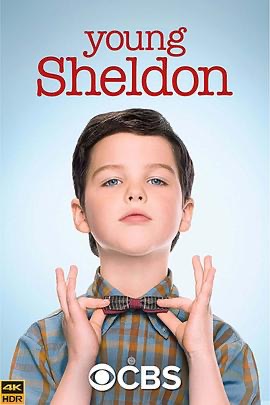
9.3Young Sheldon Season 1
Story Overview
Jun 24, 2025CBS, struggling with their new comedy lineup, decided to capitalize on the success of *The Big Bang Theory* by developing a prequel spin-off centered around Sheldon Cooper. The spin-off is officially titled *Young Sheldon*, and as the name suggests, it focuses on Sheldon as a young boy. Set to air during the 2017-2018 season, the show will not feature the adult version of Sheldon but will focus on his life at the age of 9. The series will follow the single-camera family comedy style similar to *Malcolm in the Middle*, telling the story of Sheldon’s childhood in East Texas, including his family and school life. The show is created and executive produced by Chuck Lorre and Bill Prady, with Steve Molaro, Todd Spiewak, and Jim Parsons (the actor who portrays Sheldon in *The Big Bang Theory*) serving as producers and executive producers. From past *Big Bang Theory* episodes, we know Sheldon’s family includes his brother George, his fraternal twin sister Missy, his religious mother Mary Cooper, and his alcoholic father George Cooper. Sheldon also has a grandmother (Meemaw) and grandfather (Pop Pop), with Pop Pop having passed away when Sheldon was five. *Young Sheldon* is directed by Jon Favreau, and Iain Armitage will play the young Sheldon Cooper. Zoe Perry will portray his mother, Mary Cooper, Lance Barber will play his father, Raegan Revord and Montana Jordan will play Sheldon’s siblings (sister?), and Annie Potts will play his grandmother.
Review Highlights
5 entriesThe Heartwarming Version of Sheldon
10.0I have to say, compared to *The Big Bang Theory*, I prefer this spin-off. Watching *TBBT*, I always felt like Sheldon was a genius raised in an ordinary family and well taken care of—he’s a bit sarcastic, a little stubborn, has almost zero social skills, and reacts slowly or not at all to various emotions. But he's a cute, quirky, and normal person—he’s not antisocial, depressed, or crazy.
The Heartwarming Version of Sheldon
I have to say, compared to *The Big Bang Theory*, I prefer this spin-off. Watching *TBBT*, I always felt like Sheldon was a genius raised in an ordinary family and well taken care of—he’s a bit sarcastic, a little stubborn, has almost zero social skills, and reacts slowly or not at all to various emotions. But he's a cute, quirky, and normal person—he’s not antisocial, depressed, or crazy.
I have to say, compared to *The Big Bang Theory*, I prefer this spin-off. Watching *TBBT*, I always felt like Sheldon was a genius raised in an ordinary family and well taken care of—he’s a bit sarcastic, a little stubborn, has almost zero social skills, and reacts slowly or not at all to various emotions. But he's a cute, quirky, and normal person—he’s not antisocial, depressed, or crazy.
*Young Sheldon*, as a family drama, really does a great job of showing Sheldon’s growth in a typical family. Although the family is loud and chaotic, you can still feel the love between them, and each family member feels real and fleshed out.
The young actor perfectly portrayed the Sheldon I imagined as a child. I can truly believe that this is a genius, smart but awkward, with the innocence and cuteness of a child. Compared to the adult Sheldon in the early seasons of *TBBT*, young Sheldon has more humanity and childlike qualities. He would, for example, take off his gloves and hold his father’s hand when he hears that his dad is sad about being fired; he’d check out friendship books because he knows his mom is worried about him not making friends; he’d lose sleep when his dad is sick and in the hospital. This version of Sheldon is absolutely adorable—he's not emotionally distant and only focused on knowledge. He’s not a precocious child; despite his extraordinary intelligence, his emotional expressions are those of a child. His awkward ways of showing love are the most fun to watch.
Maybe I just can't resist this kind of heartwarming family drama. The first eight episodes had so many moments of family bonding that really touched me. In episode 4, when Meemaw says in the car, "When you get older, you start losing hair, wetting the bed, blah blah, you become a baby again..." and in episode 8, when Sheldon says, “That was the best trip I ever had. I wish I’d told my father while he was alive,” I instantly teared up. Time, please slow down... little Sheldon, please take your time growing up...
A Brief Discussion on the Importance of the "Father" Figure
10.0What I want to talk about is a relatively single aspect: the portrayal of the "father" figure in this series.
A Brief Discussion on the Importance of the "Father" Figure
What I want to talk about is a relatively single aspect: the portrayal of the "father" figure in this series.
What I want to talk about is a relatively single aspect: the portrayal of the "father" figure in this series.
In *The Big Bang Theory* (TBBT), it's clear that compared to Penny and Bernadette, whose fathers are strong and masculine figures, Sheldon’s father is absent due to his early death, leaving a void in Sheldon’s life and development. This can also be applied to the other characters in *TBBT*: Howard’s father left him at a young age; Amy, Leonard, and Raj all have fathers, but Amy’s father is extremely controlled by his wife, Leonard’s father is a nerd, and Raj’s father is rich but doesn’t understand him. Moreover, the relationships between their parents aren't particularly good. Interestingly, Penny and Bernadette are the most well-adjusted characters among them. Sheldon and Amy have almost social disabilities, and Leonard, Howard, and Raj all carry insecurities and lack a masculine energy. I suspect this may not be entirely unrelated to the role their fathers played in their lives.
As for Sheldon’s father, *TBBT* mentions multiple times that he was completely different from Sheldon: a football coach with a fiery temper. A man like this must have been quite masculine, but we don’t see much impact of his character on the main storyline.
Until we got *Young Sheldon*, we didn’t realize how much Sheldon’s father influenced his early years, and how this influence is missing in *TBBT*. In fact, the father figure plays a more significant role in the series than the mother figure. Sheldon’s father, Meemaw’s baseball coach husband, Sheldon’s older brother, and even Sheldon’s grandmother all play father-like roles at different times. Even Dr. Sturgis becomes a mentor and a father figure in Sheldon’s scientific life. Living in such an environment, Young Sheldon is fortunate, because he receives not only his mother’s warm, loving care but also guidance and influence from the male figures in his life, in terms of both personality and career. For example, his father teaches him to take responsibility for his actions, not to vent his frustration at work onto his family, and the spirit of sacrificing personal interests for the happiness of his family. His grandmother teaches him how to bluff, teaches Missy to play baseball to gain confidence, and his father teaches George about sales and business, and how to chat with men. These all have masculine influences. By the third season, Young Sheldon is no longer the out-of-touch, otherworldly character we saw in the early seasons of *TBBT*. Instead, he’s sometimes quite humane, responsible, and mature.
However, after Sheldon’s father passed away early and Sheldon went off to college, the influence of the "father" figure was prematurely interrupted, leaving Sheldon to grow up without the guidance of a father figure during his crucial teenage years.
By the time we see Sheldon in *TBBT*, his more affectionate side has disappeared by season 1. The audience still watches Sheldon’s gradual return to "humanity" over time. So who plays that role for him? I’d say it’s Penny. Some might argue it’s Amy, but Amy’s return to "humanity" still depends on Penny as her role model. Observant viewers might notice that Meemaw’s character in *Young Sheldon* is very similar to Penny’s, and I don’t think this is a coincidence but rather a deliberate design by the writers. Penny plays the "father" role in Sheldon’s life as an adult, influencing him with her personality, helping him grow into a real man who is caring, responsible, and capable of being there for his friends and relationships. On the other hand, Leonard, as Sheldon’s roommate, seems more like a "mother" figure, constantly accommodating Sheldon. Leonard’s behavior likely stems from the weakened father figure in his childhood and the need to adapt to a mother-dominated environment.
Moreover, we see Sheldon’s subconscious longing for a father figure in *TBBT*. He initially dislikes Penny’s straightforwardness but can’t live without her; he excitedly calls Proton "father" when accepting an assignment from his childhood idol; he asks Stephen Hawking’s advice before proposing to Amy; and when watching a football game with Bernadette’s father, Sheldon becomes emotional when Bernadette’s father offers him a drink in place of his own father, even getting drunk. All of this shows Sheldon’s deep desire for a male elder who can teach and influence him.
Unfortunately, Sheldon’s father died too early, and he only found the qualities of sacrifice, endurance, responsibility, and commitment in his adult friends. This also highlights how indispensable the role of a father is in a family, and how the influence of masculine traits is crucial for a child's well-rounded personality.
Exploring Parent-Child Interaction through Young Sheldon
8.0If *The Big Bang Theory* portrays Sheldon as a genius with low emotional intelligence, then *Young Sheldon* undoubtedly serves as a way to redeem him. At least in terms of parent-child relationships, young Sheldon is portrayed as more capable than his older siblings.
Exploring Parent-Child Interaction through Young Sheldon
If *The Big Bang Theory* portrays Sheldon as a genius with low emotional intelligence, then *Young Sheldon* undoubtedly serves as a way to redeem him. At least in terms of parent-child relationships, young Sheldon is portrayed as more capable than his older siblings.
If *The Big Bang Theory* portrays Sheldon as a genius with low emotional intelligence, then *Young Sheldon* undoubtedly serves as a way to redeem him. At least in terms of parent-child relationships, young Sheldon is portrayed as more capable than his older siblings.
Behind every prodigy is a powerful mother. Even though the entire world, including his husband and children, may view Sheldon as an "oddball," his mother continues to insist that her child is simply "special."
Sheldon's intelligence and reasoning make him socially incompatible with those around him. However, his relationship with his mother is remarkably harmonious. For instance, Sheldon, who has severe OCD, insists on wearing thick gloves when shaking hands with his family before dinner, and his father criticizes him for it, only for his mother to step in and defend him. When his mother wants him to accompany her to church, his brother and sister refuse with various excuses, but Sheldon volunteers without hesitation. Even when Sheldon is expelled for criticizing his teachers, his mother stands firm and refuses to transfer him to another school, believing Sheldon was right.
In contrast to the occasional bickering between his mother and siblings, Sheldon and his mother share a deep bond. Even though they think differently, his mother believes that Sheldon doesn't understand social norms and needs extra care, while Sheldon views his mother as a "nice lady" who is trustworthy and dependable.
Psychologist Daniel Stern from Cornell University’s Medical School conducted a study on a pair of twins and their mother. He argued that the most crucial moments in parent-child interactions occur when children realize their emotions are met with empathy and acceptance. He refers to this process as "coordination." Sheldon’s mother is in sync with him, whereas his siblings are not. For example, when his brother expresses a desire not to be in the same class as Sheldon, his mother disregards his feelings. When his sister asks why Sheldon is so smart and she is bad at math, his mother dismissively praises her hair.
These repeated moments of either harmonious or uncoordinated interactions between parents and children shape a child's emotional expectations in future close relationships. So, when Sheldon grows up and meets Leonard, it's no surprise. In fact, if you observe closely, Leonard drives Sheldon to work, endures his roommate conditions, and essentially plays the role of Sheldon’s mother.
During his childhood, Sheldon’s biggest challenge was “how to find a friend.” However, at that time, Sheldon didn't need a friend; he just didn't want his mother to worry. At this stage, Sheldon displays a great deal of empathy. From an emotional intelligence perspective, young Sheldon’s EQ isn’t low; he’s simply "special," with a unique way of thinking.
\*Note 1: Refers to Daniel Goleman’s work *Emotional Intelligence.*
A Delicious Meal in Childhood
3.0In both *Shameless* and *Young Sheldon*, there are scenes where kids from poor families view Red Lobster as a "once-in-a-lifetime" experience. This suggests that for an entire generation, the restaurant was a universal standard for dividing social classes. It's similar to how places like Lao Mo or the Changbai Mountain Hotel are viewed in some circles. As children, everything seemed big and brightly colored, and because of our limited experiences, we were easily swayed by advertising tactics. As a result, we had many strange idols and dreams that, looking back now, seem bizarre—like the Big Mac, the ethereal stage name "Flying Bird Cool," or the Maldives with "Sha Qing Shui You." American kids, too, once believed that if they could just eat the red lobster, life would improve.
A Delicious Meal in Childhood
In both *Shameless* and *Young Sheldon*, there are scenes where kids from poor families view Red Lobster as a "once-in-a-lifetime" experience. This suggests that for an entire generation, the restaurant was a universal standard for dividing social classes. It's similar to how places like Lao Mo or the Changbai Mountain Hotel are viewed in some circles. As children, everything seemed big and brightly colored, and because of our limited experiences, we were easily swayed by advertising tactics. As a result, we had many strange idols and dreams that, looking back now, seem bizarre—like the Big Mac, the ethereal stage name "Flying Bird Cool," or the Maldives with "Sha Qing Shui You." American kids, too, once believed that if they could just eat the red lobster, life would improve.
In both *Shameless* and *Young Sheldon*, there are scenes where kids from poor families view Red Lobster as a "once-in-a-lifetime" experience. This suggests that for an entire generation, the restaurant was a universal standard for dividing social classes. It's similar to how places like Lao Mo or the Changbai Mountain Hotel are viewed in some circles. As children, everything seemed big and brightly colored, and because of our limited experiences, we were easily swayed by advertising tactics. As a result, we had many strange idols and dreams that, looking back now, seem bizarre—like the Big Mac, the ethereal stage name "Flying Bird Cool," or the Maldives with "Sha Qing Shui You." American kids, too, once believed that if they could just eat the red lobster, life would improve.
Also, there was the idea of the most beautiful woman in childhood—Zhou Haimei. Her name contained the word "mei" (charm), which I only half understood at the time, but the more I looked at her, the more charming she seemed. Whether it was her subtle advances toward Jacky Cheung or her sharp glances as Zhao Min, I would admire her from the "charming" angle. But reality is harsh, and all those ideals faded. Now, I’ve had some life experiences, and my perceptions of the word "mei" have shifted, from sweet to clingy, from nauseating to slutty. As a result, Zhou Haimei is no longer my one and only goddess. Watching her now reminds me to resist that suffocating feeling.
When I liked Zhou Haimei, I was in the early stages of my first crush, on a classmate who resembled her—big face, big eyes, and the name "Ting," which I only half understood at the time. Nowadays, I no longer feel that same overwhelming admiration for "Ting," nor do I experience the same heart-fluttering or sweating.
Actually, that’s not entirely true. Though I’ve since admired other actresses like Jiang Wenli, Gao Yuanyuan, Lin Yichen, and even Chen Yuqi and Xu Yating in the past couple of weeks, only Zhou Haimei holds a lifelong spot in my heart. She’s the one who left a lasting impression. "Ting," on the other hand, is something I now laugh at as a childhood misunderstanding—though the fact that I still laugh at it suggests some lingering, awkward self-consciousness.
As for that American kid, now driving a budget car and passing by Red Lobster, how would his thoughts stir? Perhaps it’s because he’s "seen better" that he no longer has a fondness for lobster. But deep down, he might still recall how, as a child, he dreamed of his father taking him to Red Lobster for lobster with Zhiruo. However, if you think about it, the lobster has become a part of his memories, and even if he doesn’t like it anymore, he can’t let it go. He still feels compelled to go in and check the menu to see what’s changed.
A segment that impressed oneself deeply
8.0I spent the entire night watching this series of short episodes, and after finishing, I actually dreamt that I was recalling the English short plays from the movie. So, I decided to write down the memorable scenes.
A segment that impressed oneself deeply
I spent the entire night watching this series of short episodes, and after finishing, I actually dreamt that I was recalling the English short plays from the movie. So, I decided to write down the memorable scenes.
I spent the entire night watching this series of short episodes, and after finishing, I actually dreamt that I was recalling the English short plays from the movie. So, I decided to write down the memorable scenes.
One moment that stands out is when the special young Sheldon speaks oddly in church and is questioned by the adults about whether he has a problem. His mother fiercely steps in to protect him, and when young Sheldon leans on her shoulder, it feels like the perfect moment of a mother protecting her child and giving him support.
His father also supports some of his interests and gives him strength. In terms of family education, I think this serves as a great example, reminding me as a future mom.
:)